
Electricity Storage Systems
Save energy when it's cheap—use it when you need it
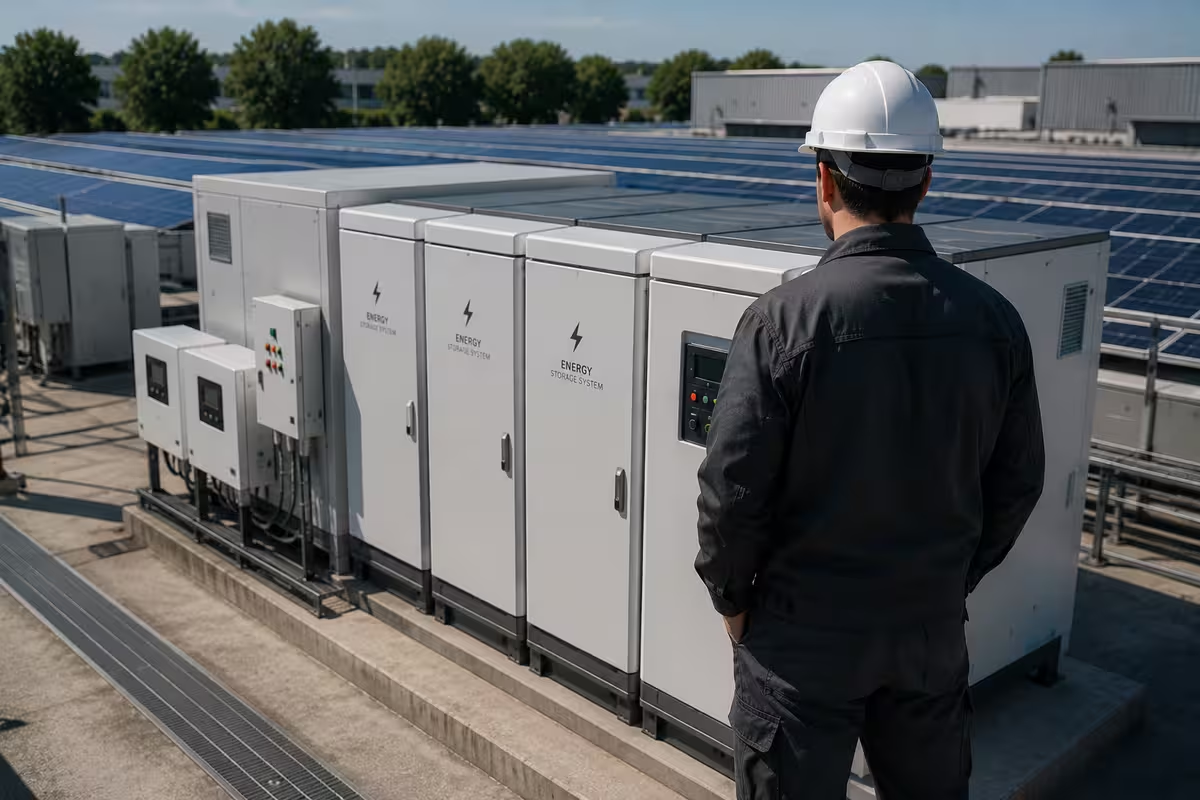
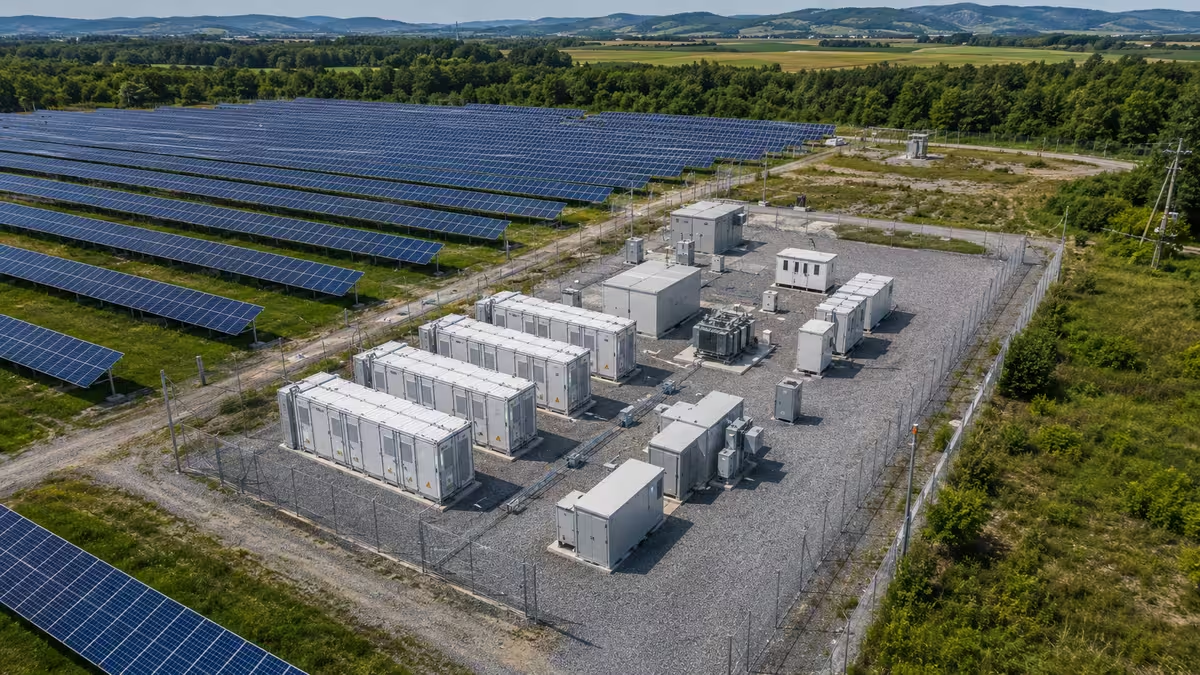
When a business or home generates more electricity than it consumes, the surplus is often simply fed into the grid. But an energy storage system allows you to use that energy later—exactly when you need it: in the evening, during peak demand, or during power outages. This provides greater independence from the grid and full control over your own energy consumption.
Who needs an energy storage system?
Energy storage systems are becoming a vital component of modern energy infrastructure. They allow for the storage of excess electricity and its use during periods of peak demand or during power outages. That is why electricity storage is becoming increasingly important for both private users and businesses seeking operational stability for their equipment and cost control.
Read more
Such solutions are particularly relevant for facilities where the power supply must operate continuously. For example, a home battery storage system allows you to store the energy generated by a solar power system during the day and use it in the evening or during power outages. An energy storage system is most useful for the following users:
- owners of solar power plants who want to make effective use of surplus generation
- businesses with peak electricity consumption
- businesses with peak electricity consumption
- facilities in regions with unstable or overloaded power grids
- private homes equipped with a home battery system
Thanks to such solutions, electricity storage helps increase energy independence, optimize the use of generated electricity, and ensure the stable operation of equipment even in the event of power outages.
How the Energy Storage System Works
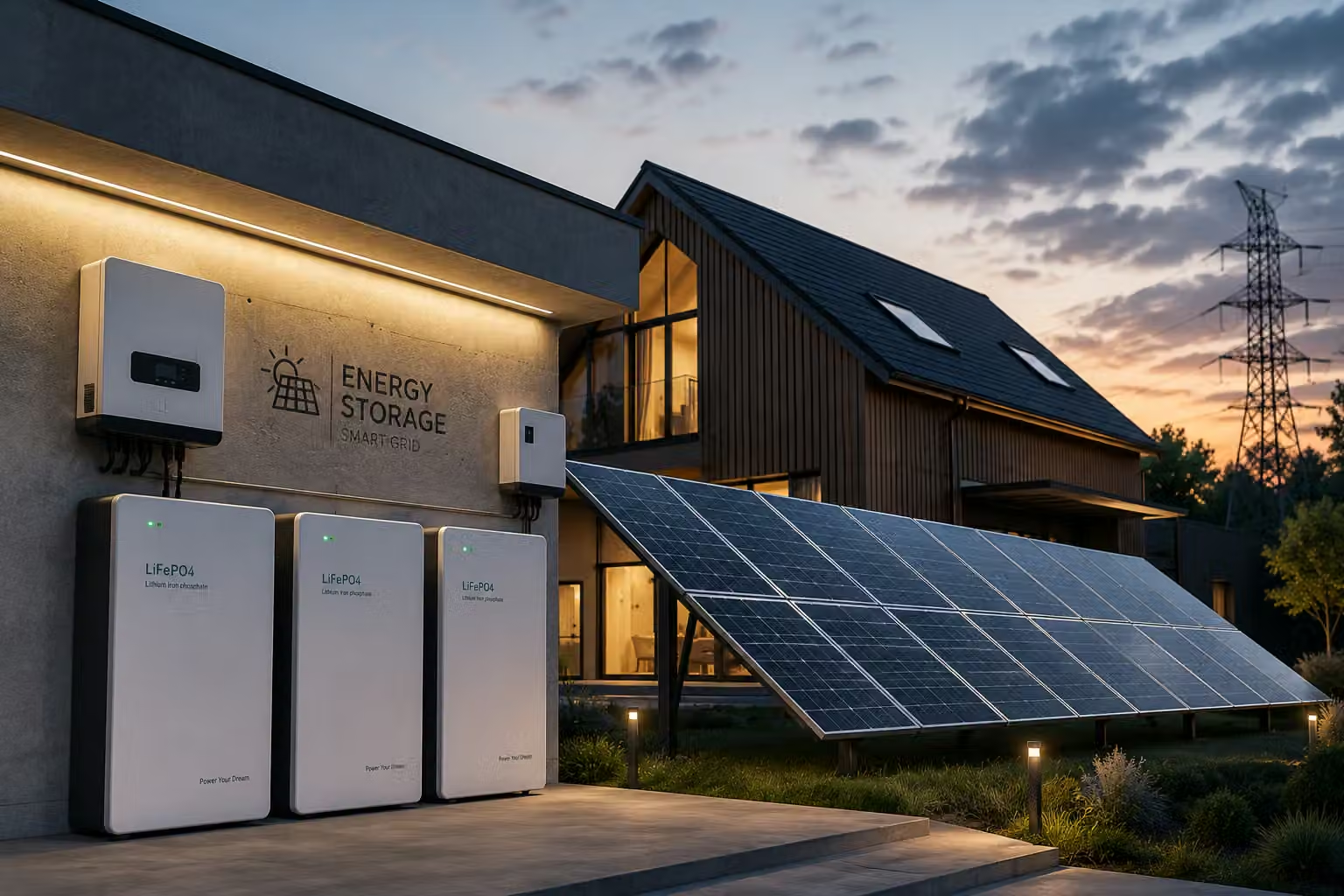
The energy storage system works on a simple principle: electricity is first generated, then stored, and used when it is needed most. When a solar power plant generates more electricity than a home or business consumes, the surplus is directed not to the grid but to the solar power plant’s battery, where the energy is stored until it is needed.
Thanks to this, solar power plant batteries allow you to use your own electricity even in the evening, when the solar panels are no longer generating power. Such a system also provides a backup power supply during outages or when the power grid is unstable. The storage system works as follows:
01.
Solar panels generate electricity during the day
02.
Some of the energy is used immediately to power a home or business
03.
The excess is fed into the solar power plant's battery for storage
04.
In the evening or during a power outage, power is supplied by the battery
05.
The system automatically regulates energy storage and consumption
As a result, batteries for solar power plants serve as an energy reserve, allowing for more efficient use of the electricity generated. This approach helps reduce dependence on the grid, improve energy stability, and make the solar power plant operate more efficiently.
What Does the Storage System Consist Of?
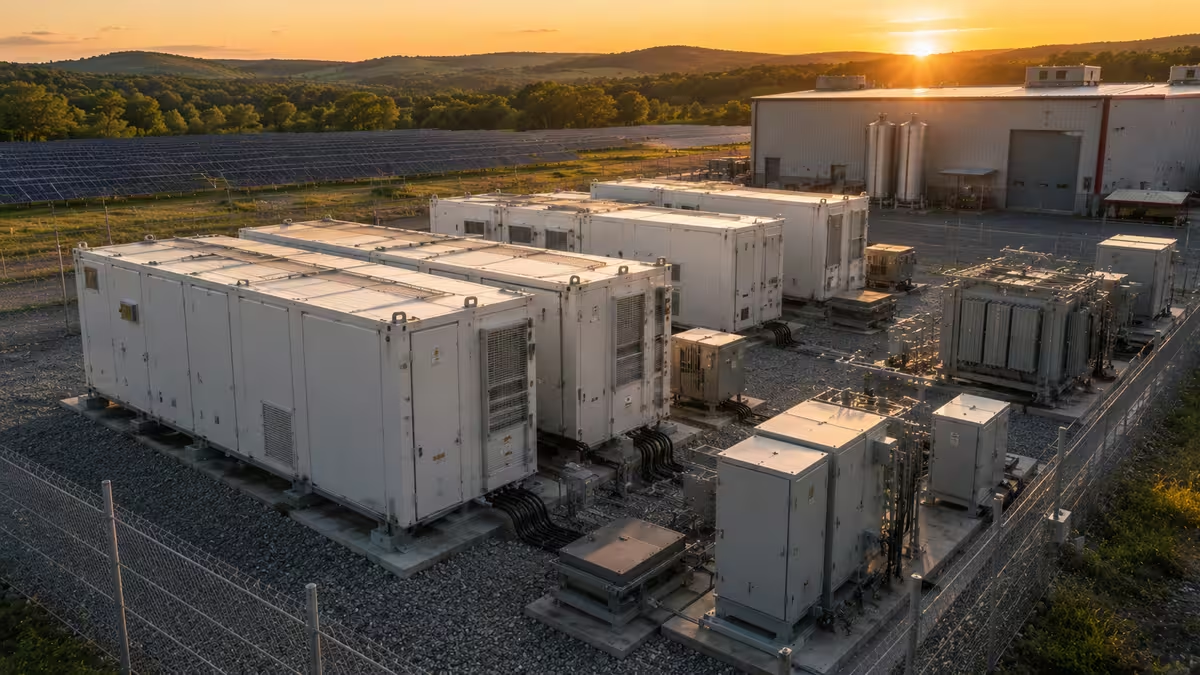
An energy storage system consists of several key components that work together to ensure the stable storage and use of energy. At the heart of the system are rechargeable batteries—most often modern LiFePO4 or lithium-ion modules—which are responsible for storing the generated electricity. They are characterized by high cycle life, stable performance, and the ability to be used for long periods without significant loss of capacity.
In addition to the batteries, the system includes a hybrid inverter, a battery management system (BMS), and a set of protection modules. The hybrid inverter manages the flow of electricity between the solar panels, the batteries, and the grid. The BMS monitors the condition of the batteries, charge balance, and ensures their safe operation. The protection system, in turn, ensures the stable operation of the equipment by preventing overloads, short circuits, and other risks.
How System Capacity Is Determined
The capacity of the battery system is always selected on a case-by-case basis, based on the facility’s actual electricity consumption. The main task is to determine how much energy needs to be stored to ensure stable operation of the equipment in the evening or during a power outage. That is why the battery for a solar power plant is calculated not only based on the plant’s capacity but also on its electricity consumption profile.
It is important to understand that a system with excessively large capacity is not always the optimal solution. Excess batteries may only be partially utilized, which increases the project budget without significantly improving efficiency. A well-designed energy storage system allows you to strike a balance between autonomy, system cost, and the facility’s actual needs. The following parameters are taken into account when calculating the system’s capacity:
- average daily electricity consumption
- critical loads that must operate continuously
- Desired system battery life
- Solar power plant capacity and electricity generation
- Daily electricity usage pattern
Based on this data, engineers determine the optimal battery capacity. As a result, the solar power plant’s battery operates efficiently, and the storage system provides the necessary level of autonomy without unnecessary costs associated with excess capacity.
Cost of an Energy Storage System
The cost of a storage system is determined on a case-by-case basis for each facility, as it depends on several key parameters. First and foremost, the battery capacity in kWh, the battery type (e.g., LiFePO4 or lithium-ion), and the level of system integration into the existing energy infrastructure are taken into account. In most cases, a hybrid storage system is selected to optimally coordinate the operation of the solar power plant, the batteries, and the power grid.
Read more
The budget is also affected by the complexity of the connection, the need to install a hybrid inverter, protection systems, and battery management systems. If the storage system is integrated with an existing solar power plant, some of the equipment can be reused, which affects the overall cost of the project. That is why the final price is determined after a technical analysis of the site and a calculation of the optimal system configuration.
Why It's Important to Entrust Integration to Professionals
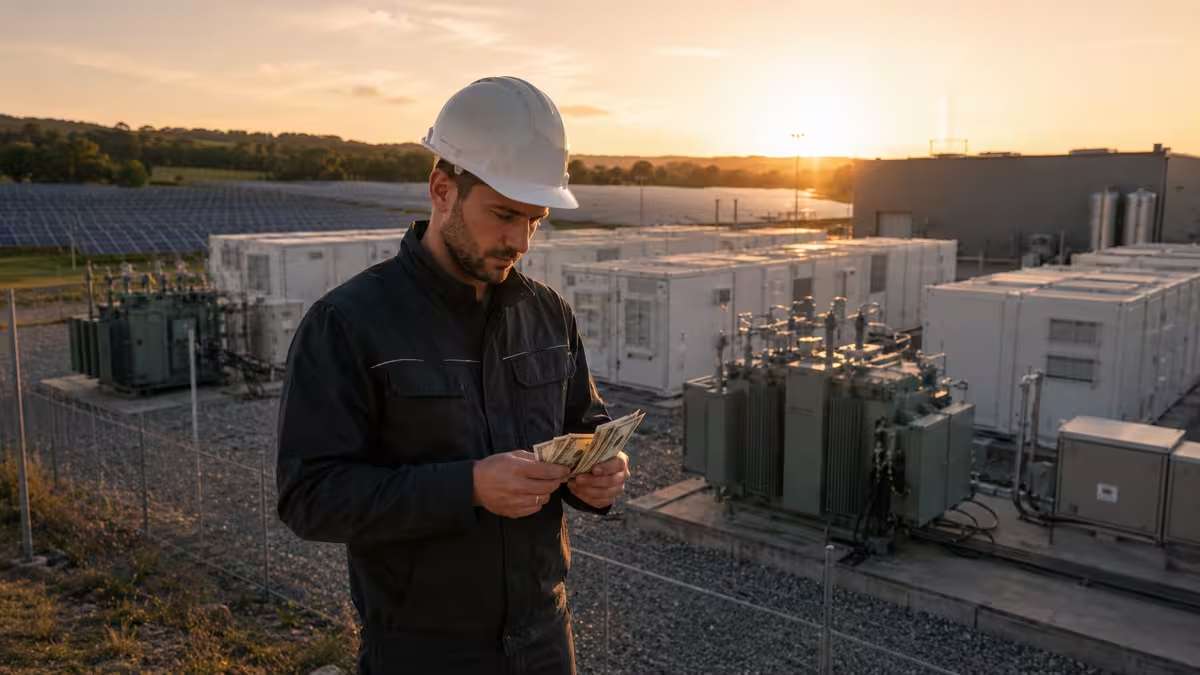
Proper integration of a battery system requires precise technical calculations and experience working with power equipment. If a battery system for a home or business is connected incorrectly, it can lead to unstable operation, overloading the power grid, or rapid battery degradation. That is why the installation and configuration of such systems must be performed by specialists who understand the principles of solar power generation and energy storage.
This is particularly important for systems that use batteries for solar power plants, as they operate in a continuous cycle of charging and discharging. Without proper battery balancing and control system configuration, overheating, reduced capacity, or malfunction of the entire system may occur. Incorrect integration of the battery system can lead to the following problems:
Read more
- Battery overheating due to incorrect charging settings
- uneven battery balancing in the system
- inverter or power grid overload
- Reduced service life of batteries for solar power plants
- unstable operation of the backup power supply
That is why the installation and configuration of the system must be performed by specialists with practical experience in implementing similar projects, such as the experts at our company, Suntime. A professionally installed home battery system operates reliably and safely, delivers predictable results, and provides the customer with a warranty covering the equipment and the proper functioning of the entire system.
Get a free consultation with an engineer
Are you planning to install a power system, or do you want to find out if solar power plants in Ukraine are a good fit for your property? Suntime’s engineers will help you assess the feasibility of installing a solar power plant, calculate the optimal capacity, and prepare a cost-saving projection.
Submit a request on our website to receive a free consultation and technical analysis—this will help you quickly choose an effective solution for your home or business.