
Turnkey Installation and Commissioning of UPS Systems
Reliable backup power without risks or overloads
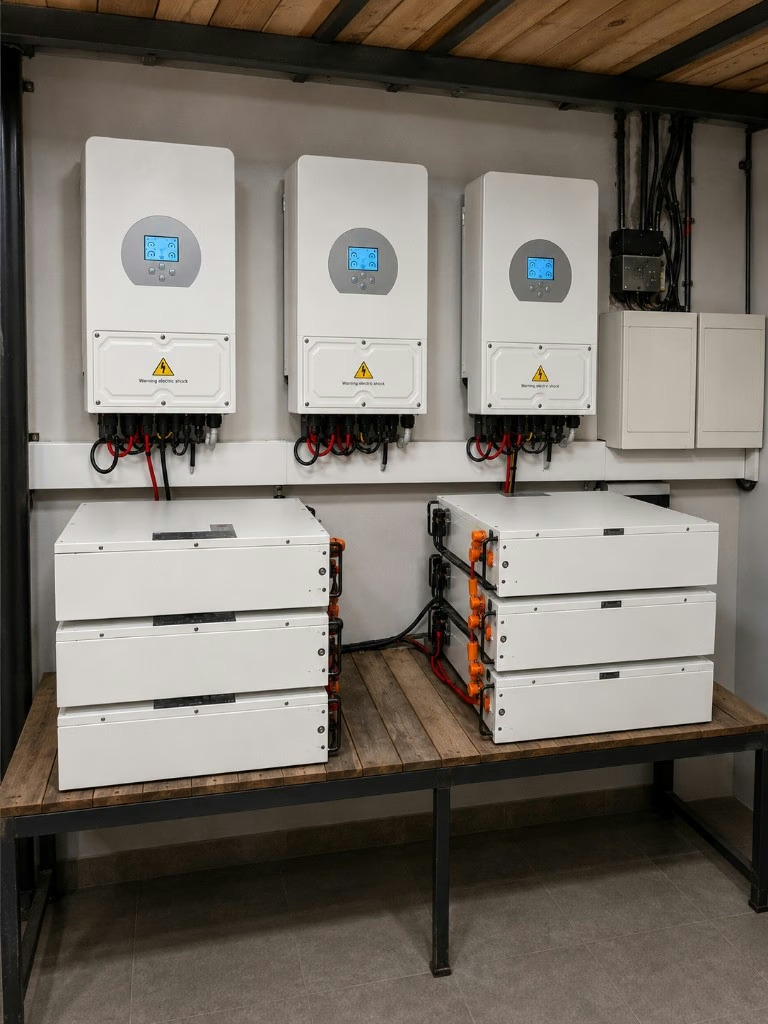
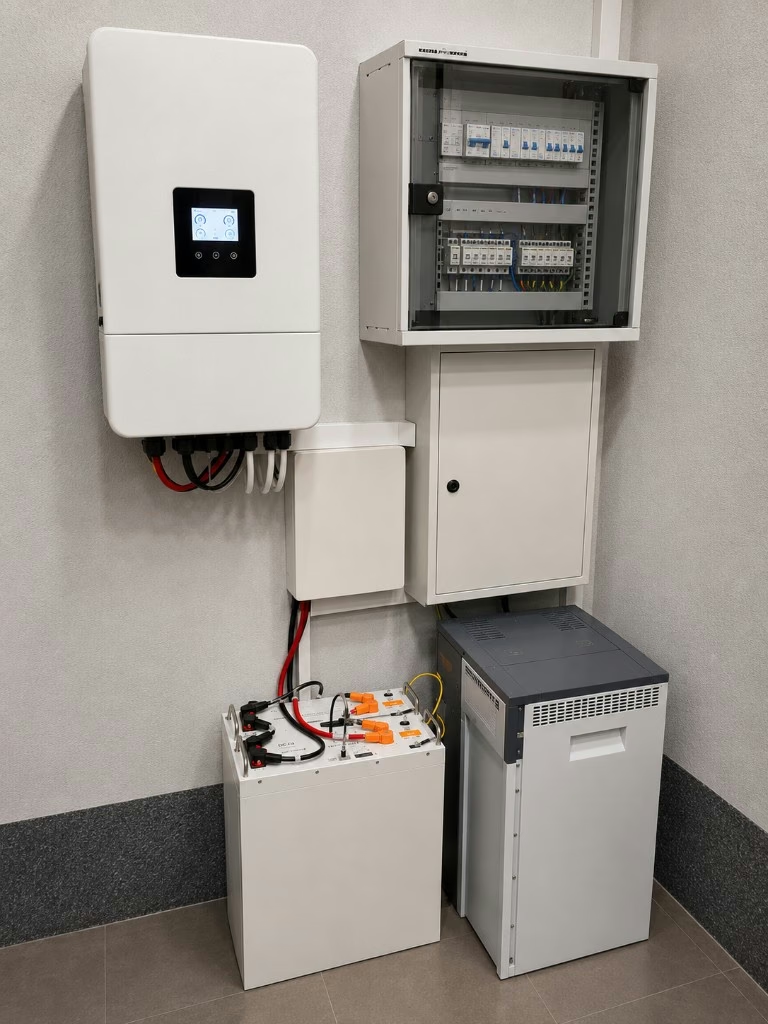
Today, an uninterrupted power supply directly affects safety, the stable operation of equipment, and the continuity of key processes at a facility. Even a brief power outage can shut down servers, video surveillance systems, boilers, pumps, network equipment, or production units—which in turn leads to financial losses, technical malfunctions, and the risk of equipment damage. That is why installing a UPS should be viewed not as an optional extra, but as a well-thought-out technical solution to protect a business, private home, or commercial facility.
Proper UPS installation helps prevent overloads, sudden voltage fluctuations, and emergency power outages, ensuring the stable operation of mission-critical systems even under unstable grid conditions. Properly selected and configured equipment ensures that you do not lose control of processes, do not have to halt operations, and do not have to act hastily in the event of a failure.
When Is a UPS Installation Necessary?
The need for an uninterruptible power supply (UPS) arises in situations where even a brief power outage can halt critical processes, cause data loss, or disrupt equipment operation. Under such conditions, connecting a UPS is not just a backup solution but a practical step to protect equipment, ensure stable facility operation, and minimize risks during power outages. Most often, system installation and commissioning are required for the following types of facilities:
Read more
01. Offices. For the stable operation of servers, computers, network equipment, point-of-sale systems, and communication devices.
02. Manufacturing. To prevent emergency line shutdowns, automation failures, and downtime caused by voltage fluctuations.
03. Healthcare facilities. To support the operation of diagnostic equipment, laboratory systems, lighting, and mission-critical devices.
03. Single-family homes. To power boilers, pumps, security systems, routers, lighting, and other essential equipment.
In each of these cases, UPS commissioning must be performed taking into account the actual load, the facility’s specific characteristics, and the operating scenarios in the event of a mains power outage. That is why it is important not only to install the equipment but also to ensure proper connection, testing, and the subsequent stable operation of the entire system from the outset.
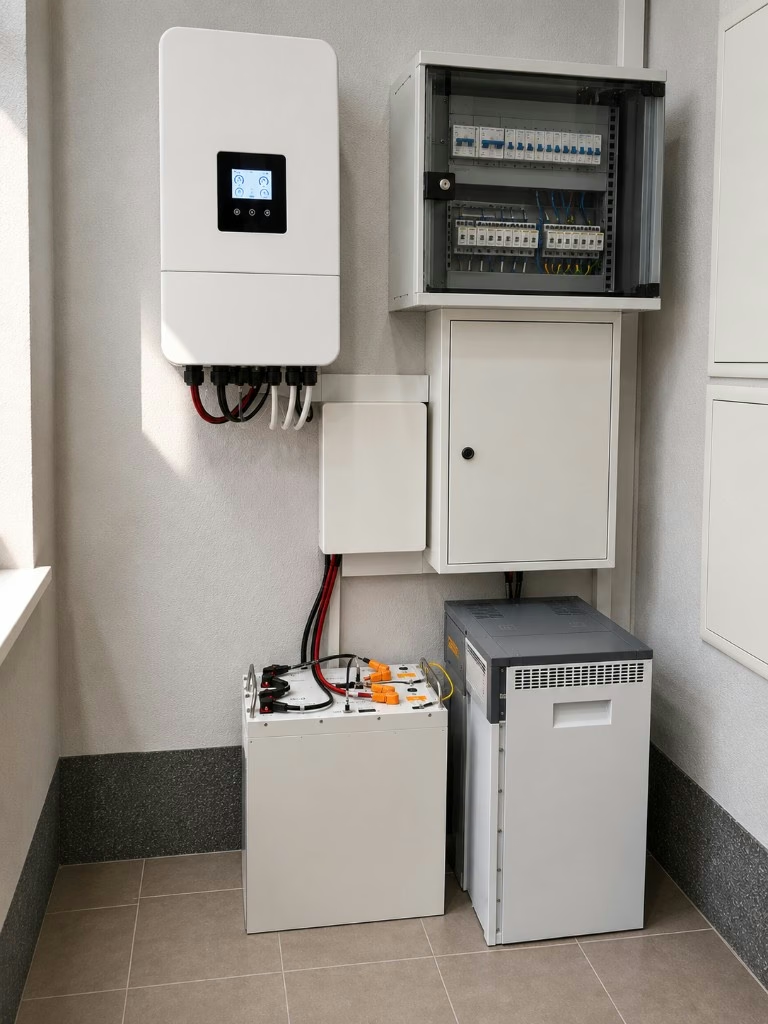
What Is Included in the UPS Installation and Commissioning Service
Suntime’s service covers the entire project lifecycle—from the technical analysis of the facility to the system’s commissioning and handover to the customer. UPS installation is carried out in stages to account for the load, select the right equipment, safely integrate it into the power grid, and test the operation of all components under real-world conditions. That is why we will now examine the main stages involved in the professional installation, configuration, and commissioning of an uninterruptible power supply system.

Step 1. Load Analysis and Equipment Selection
The first stage begins with an accurate power calculation, since the uninterruptible power supply system must match the facility’s actual load, not approximate estimates. At this stage, we determine which specific devices must remain operational during a power outage, how much power they consume, and how long the backup power supply must last for it to truly fulfill its function.
Read more
Special attention is paid to selecting the type of UPS, as different facilities require different technical solutions. For office equipment, boilers, servers, medical equipment, or production units, systems are selected based on the sensitivity of the load, the nature of the operation, and the requirements for output voltage stability. During the equipment selection phase, the following factors are typically considered:
- total and peak power of connected loads
- load type and the equipment's sensitivity to voltage fluctuations
- required system battery life
- Terms and Conditions for Installing Equipment at the Facility
- the potential for future expansion of the system
A properly conducted analysis helps avoid situations where the UPS is operating at its capacity limit or fails to provide the required runtime. That is why selecting the right equipment is essential for the stable operation of the entire system and protects the customer from unnecessary expenses in the future.

Step 2. Professional UPS Installation
Once the equipment has been selected, the practical phase begins, during which the UPS is installed in accordance with the facility’s specific characteristics, the power distribution diagram, and safety requirements. It is important not only to install the equipment in a suitable location but also to ensure it is properly connected to the power grid so that the system operates reliably during normal operation and during an emergency switchover to battery power.
Read more
This step also involves integration into the electrical panel to ensure that the uninterruptible power supply (UPS) interacts properly with other components of the electrical system. Professional UPS installation involves compliance with technical standards, proper selection of protective devices, verification of wiring, and creation of a clear diagram for future maintenance. During installation, our specialists perform the following:
- Connecting equipment to the internal electrical system
- integration of the system into the existing electrical panel
- verification of the compliance of cables and protective automation systems
- the organization of secure switching for all nodes
- preparing the system for further configuration and testing
Proper UPS installation reduces the risk of errors, overheating of contacts, incorrect mode switching, and line overloads. That is why installation work must be performed by specialists who understand not only how a UPS works but also the logic of the entire power supply system at the facility.

Step 3. Configuring and Testing the System
Once installation is complete, the system must be tested under actual operating conditions. It is during the UPS commissioning process that you can verify that the equipment responds correctly to changes in grid parameters, switches over to the batteries properly, and provides a stable power supply to the connected loads.
Read more
At this stage, specialists test the operating modes, verify the system’s behavior under load, and assess whether the overload protection activates when needed. This is important because even properly installed equipment without proper configuration does not guarantee reliable operation during an actual power outage. During testing, the following are typically checked:
- Proper switching between AC power and battery mode
- stable operation under various load conditions
- the system's response to peak loads
- overload protection tripped
- overall status of displays, signals, and operating parameters
Proper UPS commissioning helps identify potential risks before the system becomes absolutely essential. This gives the customer confidence that the uninterruptible power supply will not fail at the very moment when the facility’s stable operation depends on it.

Step 4. Commissioning
The final stage involves the official handover of the system to the customer after the uninterruptible power supply has been connected, tests have been conducted, and the equipment has been confirmed to be ready for full operation. At this stage, it is important not only to complete the technical aspects but also to ensure that the system is properly configured, easy to operate, and ready to provide backup power during normal operation.
Read more
After the technical launch, specialists provide training to the customer, explaining how the system works, the basic rules for use, and the key indicators to watch for. This approach helps prevent errors during daily operation and enables the user to better monitor the condition of the equipment. As part of the commissioning process, the following tasks are performed:
- Signing of certificates of completion
- Final system readiness check
- Providing key technical information to the customer
- training on operating procedures and basic rules of use
- coordination of recommendations for future maintenance
A professional completion of the work means that the customer receives not just installed equipment, but a system that is fully ready for operation. It is precisely this approach that allows for the use of a backup power supply without unnecessary risks, with a clear understanding of how the system works and how to maintain its stability in the future.
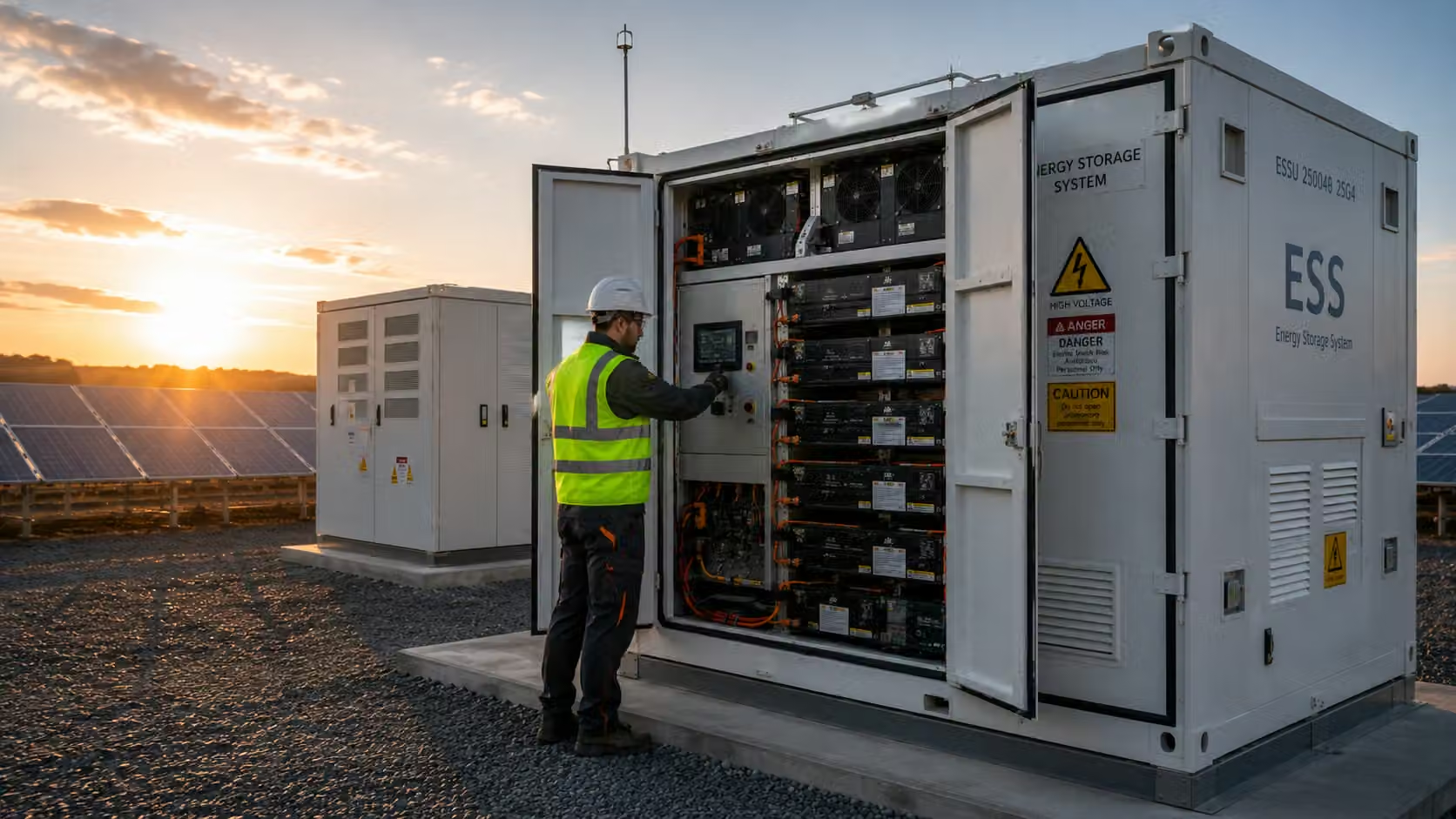
Why It's Important to Leave the Installation to Professionals
An improperly selected circuit, wiring errors, or a perfunctory approach to commissioning can reduce the effectiveness of an uninterruptible power supply system to nearly zero. That is why installing a UPS should not be treated as a basic electrical installation task: it is important to consider the load, the characteristics of the power grid, the logic of the distribution panel, the protection parameters, and the behavior of the equipment during an emergency switchover.
Another equally important step is commissioning the UPS, since even high-quality equipment requires thorough testing after installation. If you skip testing the operating modes, fail to assess the system’s response to overloads, or do not verify the system’s performance under real-world conditions, the risk of failures at a critical moment increases significantly. The main reasons to entrust this work to professionals include:
- Minimizing the risk of errors during connection and integration into the power grid
- Accurate load calculations and selection of equipment for a specific facility
- Proper configuration of overload protection and emergency modes
- System inspection prior to commencement of regular operation
- Stable and predictable equipment operation during power outages
A professional approach provides the customer not just with installed equipment, but with a technically well-designed system that truly performs its function when it’s needed most. That is precisely why you should entrust such work to the specialists at our company, Sumtime, who are responsible not only for installation but also for the stability, safety, and reliability of the entire system in operation.
Order UPS installation today
Today, a stable power supply is not just a fallback option, but a practical tool for protecting equipment, data, and ensuring the facility’s continuous operation. If the system is properly selected, professionally installed, and tested under load, it helps prevent downtime, unexpected power outages, and unnecessary costs in the future. That is why UPS installation should be entrusted to a team that understands the technical nuances, works in stages, and takes responsibility for the outcome at every stage.
Suntime offers a comprehensive approach—from analyzing the facility’s needs to commissioning the system and handing it over to the customer. We install uninterruptible power supply systems, taking into account the load, network characteristics, and stability requirements, so that you receive not just equipment, but a well-thought-out solution tailored to your specific needs. Contact Suntime today to get a consultation, select the optimal system, and order professional installation for your business, manufacturing facility, medical facility, or private home.