
UPS Maintenance and Service
Extend the service life of your UPS
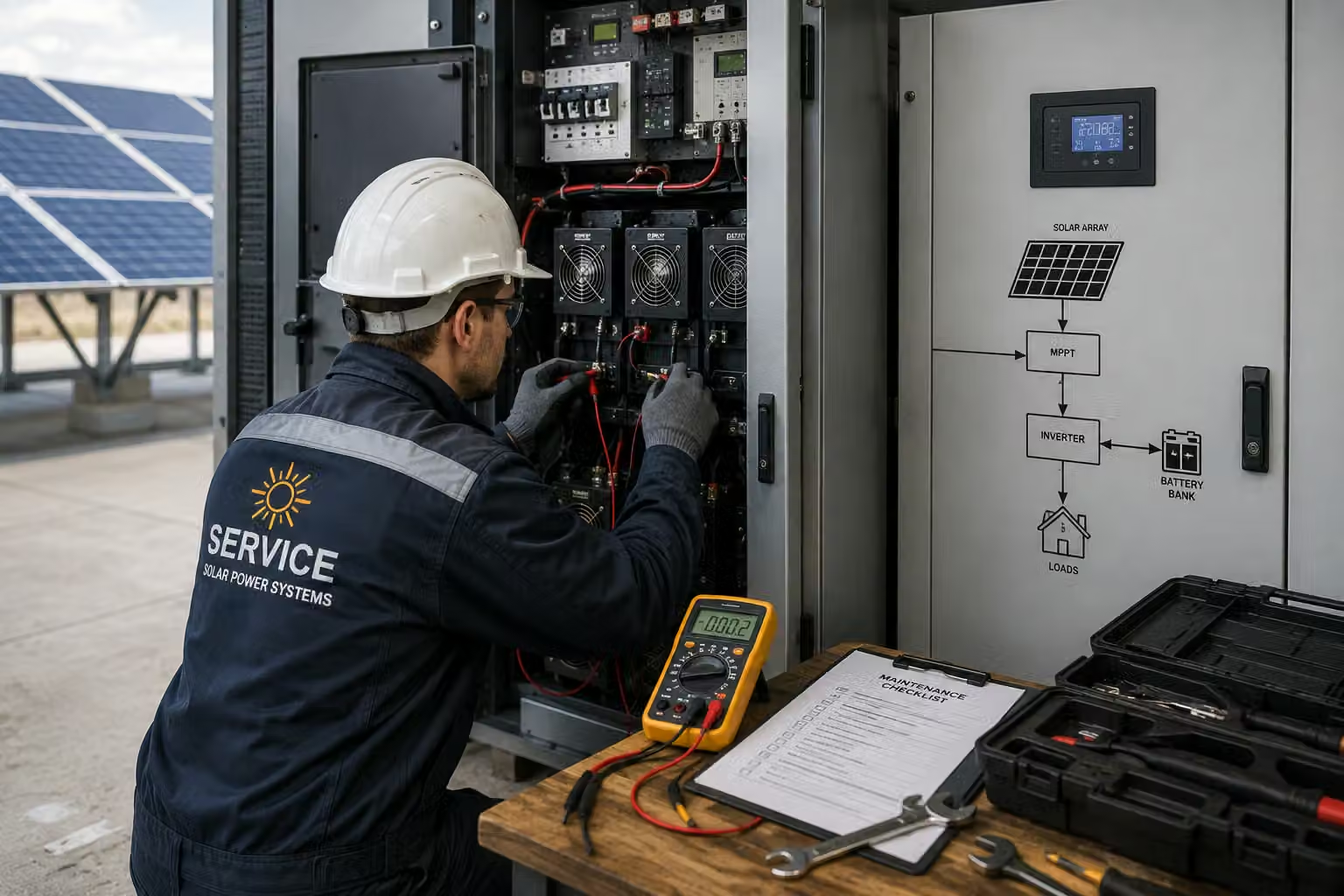
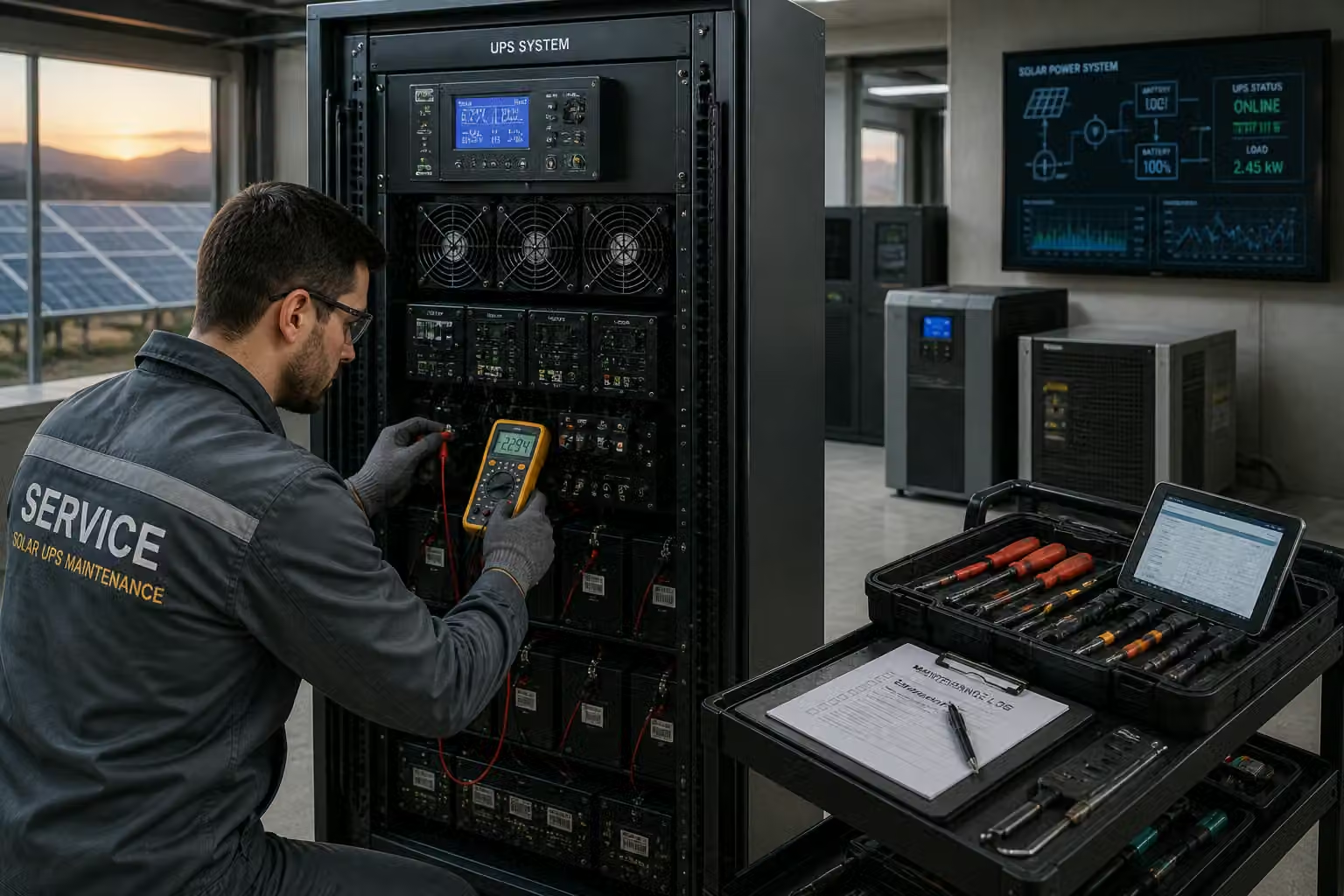
Regular UPS maintenance is necessary not only to prevent minor malfunctions. It helps to detect a decline in battery capacity, overheating, contact wear, and system errors in a timely manner—even before an emergency shutdown occurs. If an uninterruptible power supply operates for years without inspections, its actual runtime may turn out to be significantly shorter than expected. As a result, the equipment is left unprotected precisely when backup power is needed most.
Scheduled UPS maintenance helps ensure stable equipment operation, extend its service life, and avoid the costs of emergency repairs. This is especially important for homes, offices, server rooms, and facilities where even a brief power outage can shut down equipment or cause data loss. To ensure the system remains ready to handle loads and does not fail at a critical moment, it’s best not to wait for problems to arise but to take proactive measures.
When Does a UPS Require Maintenance?
There are several signs that clearly indicate that an uninterruptible power supply (UPS) needs professional attention. Most often, owners notice that the system is no longer able to handle as much load as before, or that it operates erratically during power outages. In such a situation, you shouldn’t wait for the equipment to fail completely, as timely UPS diagnostics allow you to identify the cause of the problem at an early stage and avoid more serious consequences. The following signs usually indicate the need for service:
Read more
- decreased battery life and rapid battery drain
- errors, warnings, or fault codes on the display
- Incorrect switchover to backup power
- Overheating of the housing or unusual noises during operation
- prolonged operation without a scheduled inspection
- the scheduled maintenance or battery replacement date is approaching
Even if the UPS hasn’t completely failed yet, you shouldn’t ignore these warning signs. In many cases, the problem can be resolved quickly if you inspect the UPS in a timely manner and, if necessary, repair it before the malfunction affects the operation of the connected equipment. Preventive maintenance is always more cost-effective than emergency repairs, so it’s better to perform maintenance proactively rather than after the system has shut down.
What's Included in the UPS Service
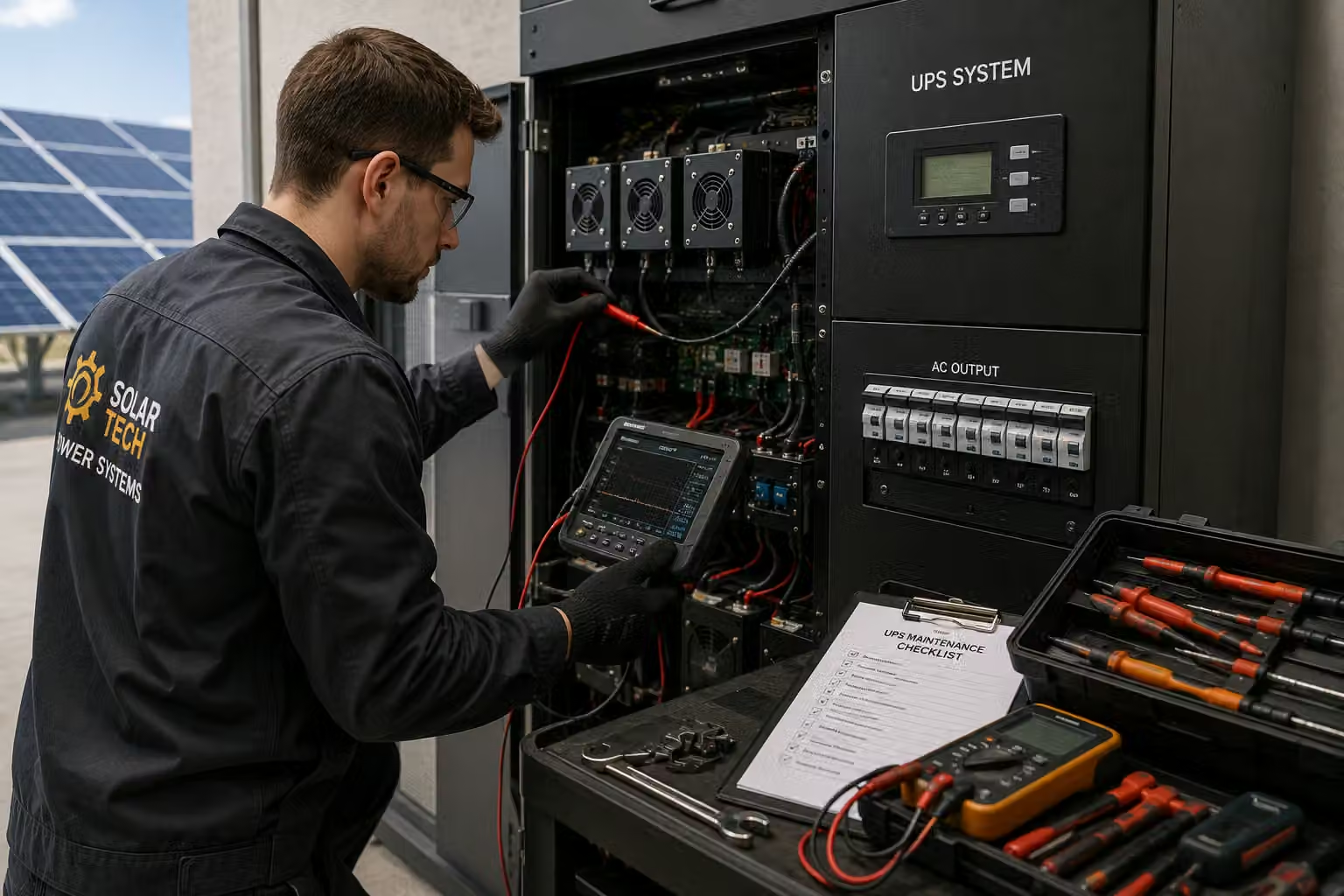
Comprehensive UPS maintenance is a set of services aimed not only at identifying current malfunctions but also at preventing future system failures. The service includes checking the technical condition of the equipment, assessing the load, analyzing battery life, performing preventive cleaning, inspecting contacts, and, if necessary, repairing and replacing individual components. That is why it is worth taking a closer look at the stages of the service and exactly what our specialists check when working on a UPS.

Equipment Diagnostics
The first stage is UPS diagnostics. During this stage, we assess the device’s overall technical condition, the proper operation of the power section, the presence of errors, the quality of the input and output power, the system’s response to load, and the condition of the battery modules. Special attention is paid to how the UPS operates specifically in your environment: at home, in a server room, boiler room, office, or manufacturing facility.
Read more
It’s important not just to “read the error,” but to understand its cause. For example, a drop in range may be caused not only by the age of the batteries, but also by overheating, chronic overloading, degradation of an individual module, or a poor connection in the circuit. As part of the diagnostic process, the following are typically checked:
- actual load on the UPS
- Charge and discharge parameters
- the condition of the batteries and their capacity
- self-diagnostic system message
- the operation of the bypass, fans, and power units
- the temperature inside the enclosure and around the equipment
This approach makes it possible to determine whether the UPS already needs to be repaired or whether preventive maintenance and adjustments to its operating mode are sufficient.

Replacing the Batteries
Once the equipment has been selected, the practical phase begins, during which the UPS is installed in accordance with the facility’s specific characteristics, the power distribution diagram, and safety requirements. It is important not only to install the equipment in a suitable location but also to ensure it is properly connected to the power grid so that the system operates reliably during normal operation and during an emergency switchover to battery power.
Read more
The typical service life of UPS batteries is about 3–5 years, and after this period, it’s best to proceed with a scheduled replacement rather than waiting for them to fail completely. Replacing UPS batteries begins not with removal, but with testing. We assess capacity, observe battery behavior under load, check voltage and the condition of connections, and only then select compatible replacements. This is important because an incorrectly selected set can shorten the system’s service life or affect the charging process. During replacement, we take the following factors into account:
- Compatibility of the batteries with the UPS model
- checking the capacity and actual service life
- condition of cables, terminals, and connections
- Post-installation test
- Safe disposal of used batteries
- proper battery disposal
Properly replacing UPS batteries isn't just a matter of “installing new batteries”; it means restoring the system's full readiness to operate in emergency mode.

Preventive Maintenance
Once installation is complete, the system must be tested under actual operating conditions. It is during the UPS commissioning process that you can verify that the equipment responds correctly to changes in grid parameters, switches over to the batteries properly, and provides a stable power supply to the connected loads.
Read more
- cleaning the housing and interior areas of dust
- Checking contacts and terminal connections
- temperature control
- inspection for signs of swelling, corrosion, or damage
- Checking the Fans and Cooling System
- baseline testing upon completion of work
That is precisely why you should not put off UPS maintenance until the equipment has already started shutting down unexpectedly. Preventive maintenance is significantly cheaper, faster, and much more predictable than emergency repairs.

Repair and Restoration of Operations
The final stage involves the official handover of the system to the customer after the uninterruptible power supply has been connected, tests have been conducted, and the equipment has been confirmed to be ready for full operation. At this stage, it is important not only to complete the technical aspects but also to ensure that the system is properly configured, easy to operate, and ready to provide backup power during normal operation.
Read more
Before beginning repairs, it is important to perform a thorough diagnostic check of the UPS rather than replacing components at random. The same problem may appear identical on the surface but have different causes: ranging from battery degradation to malfunctioning of the charging circuit or output overload. At Sumtime, UPS repairs are performed with a focus on results: restoring stable system operation, testing it under load, and ensuring that after service, the UPS not only starts up but is actually capable of protecting the connected equipment. After repair, the system undergoes testing, and the customer receives a clear overview of future operation: what has already been done, the remaining battery life, and when the next service is needed.
After the technical launch, specialists provide training to the customer, explaining how the system works, the basic rules for use, and the key indicators to watch for. This approach helps prevent errors during daily operation and enables the user to better monitor the condition of the equipment. As part of the commissioning process, the following tasks are performed:- Signing of certificates of completion
- Final system readiness check
- Providing key technical information to the customer
- training on operating procedures and basic rules of use
- coordination of recommendations for future maintenance
Contract-Based Services for Businesses
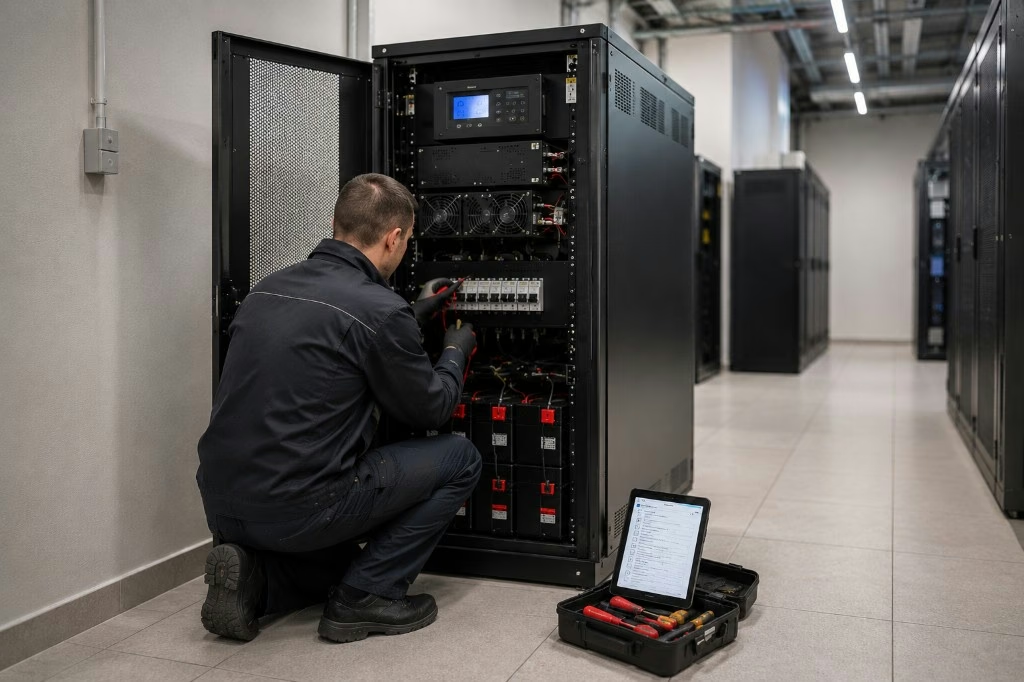
For businesses, the stable operation of uninterruptible power supplies is not a matter of convenience, but a critical part of ensuring business continuity. Servers, network equipment, video surveillance systems, cash registers, automation systems, production lines, and office equipment all depend on the reliability of the backup power supply. That is why a contracted UPS maintenance service allows you to avoid waiting for failures and instead keep the system in a predictable and controlled state.
A regular maintenance approach is especially important in situations where even a brief interruption in operation can lead to data loss, delays in customer service, or a halt in internal processes. Scheduled UPS diagnostics help detect battery wear, overloads, contact issues, and other risks in a timely manner—risks that, without maintenance, would go unnoticed until a failure occurs. As part of a service contract for businesses, the following are typically included:
01. Scheduled inspections according to an agreed-upon schedule
02. Scheduled Diagnostics of the Technical Condition of Equipment
03. Monitoring battery load and service life.
04. Preventive maintenance to avoid malfunctions
05. Timely identification of potential risks
06. Minimizing downtime in the company's operations
This service model offers businesses more than just technical support. It provides predictability, allows for planning equipment maintenance costs, and reduces the risk of problems arising at the worst possible moment. For companies that depend on a stable power supply, a service contract is a practical solution that helps keep critical infrastructure under control.
Schedule UPS Maintenance
The stable operation of an uninterruptible power supply (UPS) depends not only on its power rating or brand, but first and foremost on timely maintenance, inspections, and the proper replacement of worn-out components. That is why UPS maintenance should be viewed as an essential part of protecting your equipment, rather than as a secondary procedure. Regular monitoring of the system’s condition helps prevent emergencies, extends the equipment’s service life, and ensures that the backup power will indeed work when needed.
If you want to keep your system running smoothly without unnecessary risks or unexpected costs, order our UPS maintenance service from Suntime. We’ll help you check the condition of your equipment, identify vulnerabilities in a timely manner, perform preventive maintenance, replace batteries, or restore system operation. Turning to Suntime is a practical step for those who value stability, control, and the reliability of their facility’s power supply.