
Construction of solar power plants for commercial use
Solar Power Plant for Businesses — Cost Control and Predictable Savings
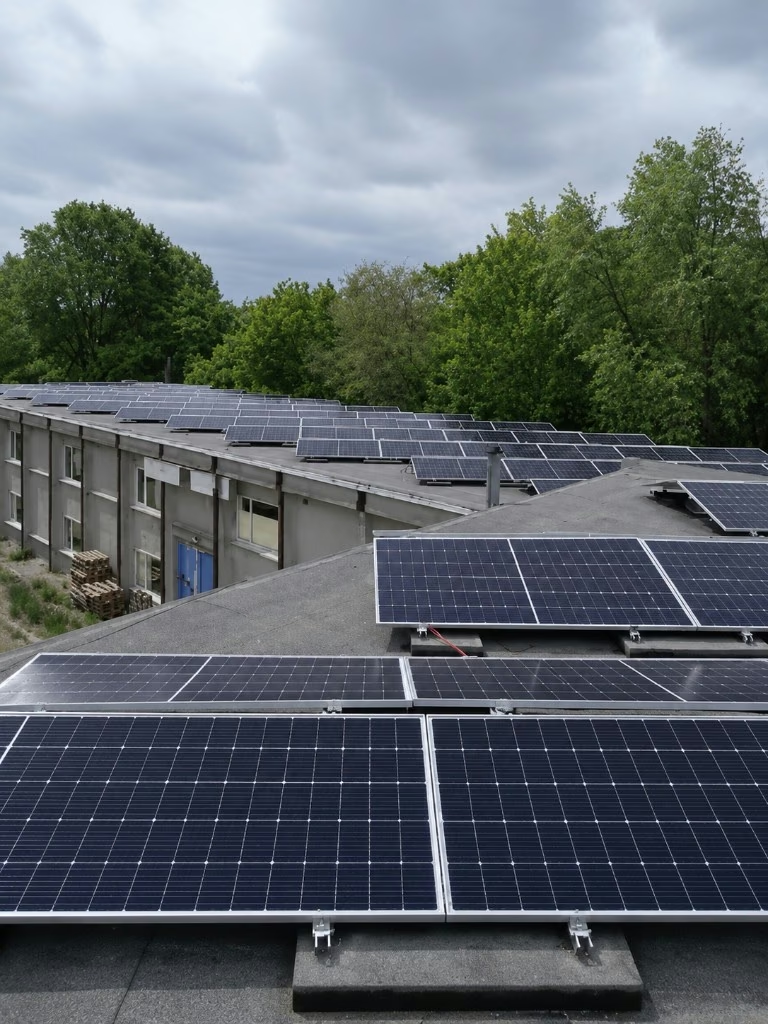
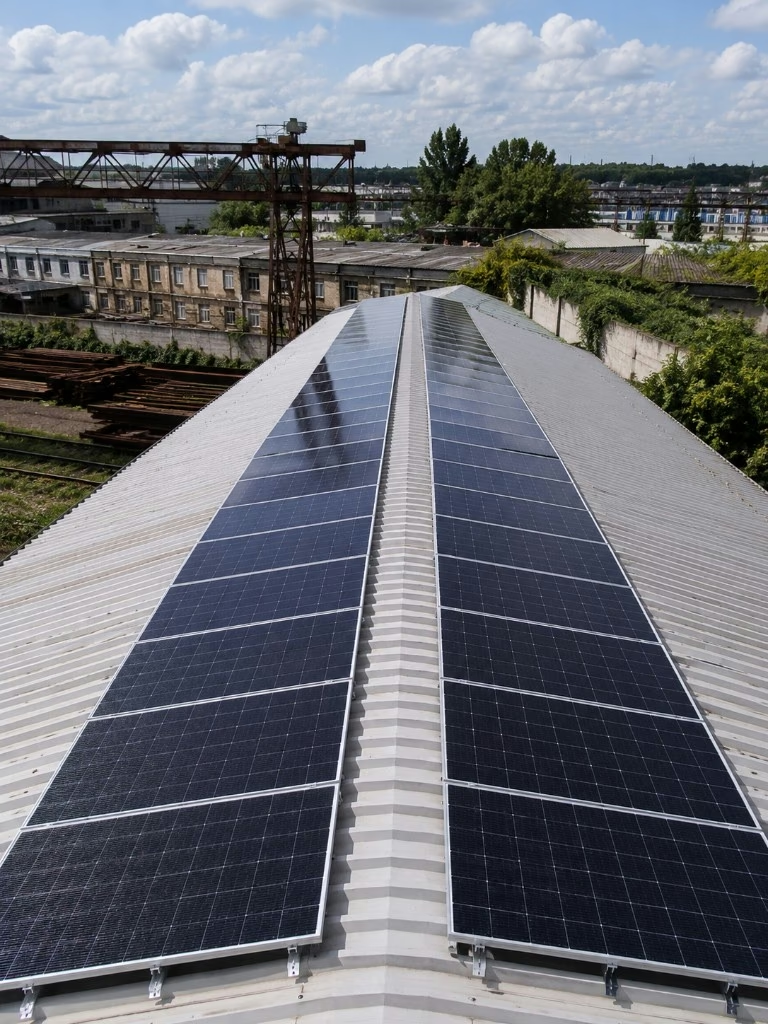
For most businesses, electricity has already become one of the largest expense items. Volatile rates, high consumption levels, and dependence on external grids are forcing businesses to seek solutions that allow them to control their energy costs. Under these conditions, an industrial solar power plant becomes more than just a “green” initiative—it is a practical tool for optimizing a company’s budget: on-site generation reduces electricity costs and allows companies to forecast financial performance for years to come.
For which businesses is it advisable to build a solar power plant?
Building an on-site power generation facility is becoming increasingly relevant for companies with stable daytime electricity consumption. It is during daylight hours that solar panels generate the most energy, so a solar power plant for a business allows it to cover a significant portion of its electricity demand without purchasing power from the grid. For businesses, this means lower operating costs and the ability to forecast energy expenses.
Experience shows that building solar power plants for businesses is most effective in locations where energy consumption occurs during the workday. This allows the generated electricity to be used immediately on-site, without losses or complex storage systems. The following types of businesses most often consider installing solar power plants:
Read more
- manufacturing plants and industrial complexes
- warehouses and logistics centers
- agricultural enterprises, grain elevators, and processing facilities
- shopping and entertainment centers and large supermarkets
- business centers and office complexes
- cold storage facilities and food processing plants
For such facilities, a solar power plant serves as the business’s own energy source, covering part or all of its daytime energy demand. That is why building a solar power plant for a business is now viewed as a strategic investment decision aimed at stabilizing costs and increasing the company’s energy independence.
How a Business Project Is Implemented
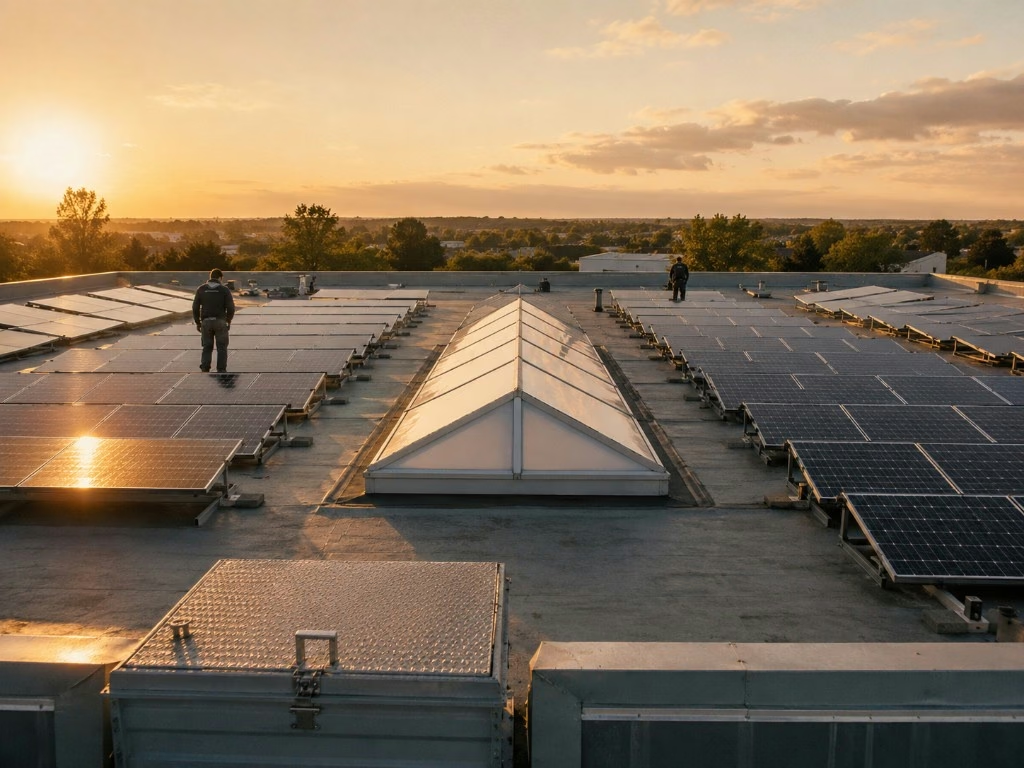
For businesses, energy projects must be implemented strictly according to schedule, with a predictable budget and minimal risks to operations. That is why the installation of a solar power plant for a manufacturing facility or other commercial site is carried out in stages: from energy consumption analysis and technical design to installation, integration into the company’s existing grid, and the final commissioning of the system. This approach allows for control over project timelines, helps avoid equipment downtime, and ensures the stable operation of the business’s power system after the plant is commissioned.
1. Energy Audit and Load Analysis
The first stage of the project is an energy audit of the facility. Engineers analyze actual electricity consumption to determine the optimal parameters for the future system. It is at this stage that an understanding is formed of what portion of energy consumption an industrial solar power plant will be able to cover and what capacity it should have.
Read more
The daily consumption profile is also examined in detail, since most commercial facilities use electricity primarily during the day. A properly conducted analysis allows the system to be designed so that the commercial solar power plant covers the facility’s load as efficiently as possible. During an energy audit, specialists assess:
- peak loads on the company's power grid
- Daily and hourly electricity consumption patterns
- seasonal fluctuations in energy consumption
- Available space for installing solar panels
- the optimal capacity of the future power plant
Based on the data collected, technical specifications for the plant’s design are developed. It is this stage that makes it possible to understand how an industrial solar power plant will be integrated into the company’s infrastructure and what economic benefits it will provide.
2. Engineering Design and Financial Model
Once the energy audit is complete, the engineering design phase begins. Specialists develop technical documentation, equipment layout diagrams, and parameters for connecting the system to the facility’s power grid. All decisions are made with the facility’s actual consumption profile in mind to ensure that the solar power plant operates as efficiently as possible.
Read more
At the same time, a financial model for the project is developed. It shows the projected electricity generation, the level of savings for the company, and the approximate payback period for the investment. This allows the business owner to understand the economic potential of the future power plant even before construction begins. The financial model includes the following calculations:
- Annual electricity generation forecast
- estimated payback period
- level of electricity savings for the company
- the ability to use the Net Billing model
- Options for working as an active consumer
This approach makes it possible to assess the economic feasibility of the project in advance. It is at this stage that it is determined how the solar power plant will be integrated into the enterprise’s energy system and what financial benefits it will provide.
3. Installation and integration into the company's existing network
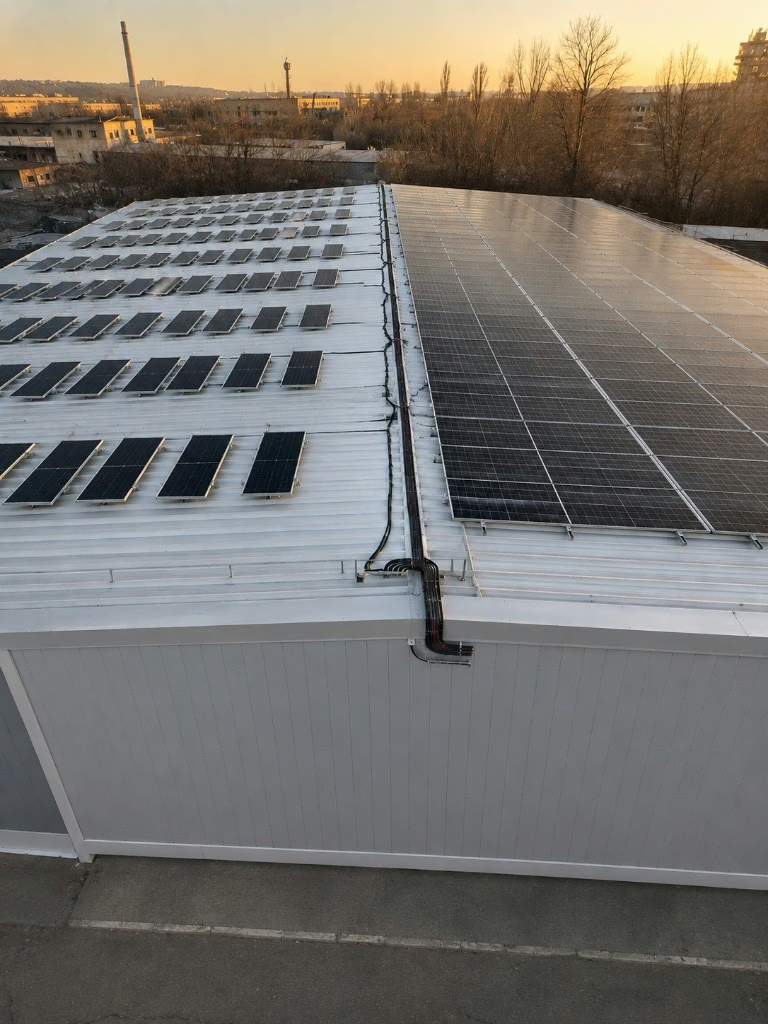
Once the design phase is complete, the equipment installation phase begins. During this phase, solar panels, inverters, mounting systems, and cabling infrastructure are installed. For most companies, it is important that the work does not disrupt production processes, so solar power plants for industrial use are typically installed without shutting down the main production lines.
Read more
Engineers are also integrating the new generation capacity into the company’s existing power grid. It is important to ensure the stable operation of the entire system and to properly distribute the load between the grid and the solar generation. The installation work includes:
Installation of solar panels on rooftops or ground-mounted structures
- Installation of inverters and protection systems
- Installation of cable runs and connection of equipment
- integration of the system into the company's internal network
- coordination of technical specifications with energy suppliers
Once installation is complete, the system is ready to be connected and tested. It is at this stage that the solar power plant becomes part of the company’s energy infrastructure.
4. Connecting and Starting the System
The final stage of the project is connecting the equipment and commissioning the plant. Engineers test all system components, verify the stability of power generation, and ensure that actual performance matches design specifications. Only after this is the construction of the solar power plant for business considered complete.
Read more
Special attention is paid to verifying the safety and stability of the equipment’s operation. The system undergoes several stages of testing to ensure that the station interacts correctly with the facility’s power grid. During the commissioning phase, the following are performed:
- Checking the operation of inverters and monitoring systems
- Electric Power Generation Testing
- monitoring the stability of the connection to the power grid
- Inspection of protection and automation systems
- training company staff on how to use the system
Once all inspections are complete, the plant is handed over to the company for operation. As a result, the solar power plant for an agribusiness or industrial facility begins operating in automatic mode, ensuring stable electricity generation and cost savings.
Financial Impact on the Company
For businesses, investments in the energy sector are evaluated primarily in terms of economic returns. That is why the construction of a solar power plant is viewed by businesses as a long-term financial solution that reduces dependence on utility rates and stabilizes electricity costs. When a company partially meets its own energy needs through self-generation, energy costs become more predictable, and the cost of production becomes more manageable.
In most commercial projects, an industrial solar power plant pays for itself in approximately 3–6 years, depending on the system’s capacity, consumption levels, and the specifics of the facility. After that, the company effectively gains its own source of electricity, which allows it to significantly reduce energy costs and optimize its operating budget. The financial benefits of installing a solar power plant for a company manifest in several ways:
01.
Reducing electricity costs through in-house power generation
02.
Stabilization of energy costs regardless of rate fluctuations
03.
Increasing the Company's Energy Independence
04.
The ability to scale the station as the business grows
05.
Long-Term Optimization of Operating Expenses
Thanks to this approach, building a solar power plant for a business becomes not just a technical project, but a strategic investment. In the long term, an industrial solar power plant allows a company to operate more consistently, reduce costs, and plan for growth without sudden changes in electricity prices.
This combination of equipment makes it possible to create stable and controllable power systems. As a result, the power plants operate in accordance with modern technical standards and deliver predictable efficiency.
Cost of Building an Industrial Solar Power Plant
The cost of implementing a project is always calculated on a case-by-case basis, since each facility has its own technical characteristics and energy needs. Typically, a commercial solar power plant for a business starts at a capacity of approximately 30 kW and can scale up to systems in the hundreds of kilowatts or even megawatts. The final cost depends on the level of energy consumption, the configuration of the enterprise’s electrical grid, and the parameters of the future plant.
Read more
The project budget is also influenced by the type of installation (rooftop or ground-mounted), the area available for installing the panels, the complexity of connecting to the grid, and the choice of equipment. For example, a solar power plant for agribusiness can be located in large open areas, whereas industrial enterprises more often use the roofs of production buildings or warehouses. That is why each commercial solar power plant is designed individually—taking into account the facility’s infrastructure, load, and the company’s economic goals.
Why Businesses Choose Us
Implementing energy projects for businesses requires not only high-quality equipment but also experience working with commercial facilities. Our company, Suntime, specializes in business solutions where a solar power plant for a business must operate reliably under constant load and integrate into the existing power grid without posing any risks to production processes.
This combination of equipment makes it possible to create stable and controllable power systems. As a result, the power plants operate in accordance with modern technical standards and deliver predictable efficiency.
- Extensive experience in implementing projects for industrial and commercial facilities
- In-house engineering team and technical expertise
- clear planning of the project timeline
- A transparent financial model and payback period forecast
- accountability for results at every stage
This approach makes it possible to implement a solar power plant for a business as a full-fledged investment project, rather than simply installing equipment. As a result, the solar power plant operates reliably, providing the business with predictable electricity generation and control over energy costs.
Get a free consultation with an engineer
Are you planning to install a power system, or do you want to find out if solar power plants in Ukraine are a good fit for your property? Suntime’s engineers will help you assess the feasibility of installing a solar power plant, calculate the optimal capacity, and prepare a cost-saving projection.
Submit a request on our website to receive a free consultation and technical analysis—this will help you quickly choose an effective solution for your home or business.